 Ga naar de hoofdinhoud
How better EHS data powers better decisions
Why business leaders should see compliance intelligence as a driver of strategic advantage
Quick Summary
- Poor EHS data leaves business leaders flying blind on regulatory risk, while better compliance intelligence directly improves decision-making on everything from market entry to mergers and acquisitions.
- Centralizing and standardizing EHS data cuts reliance on fragmented consultants, reduces costly fines and audit fees, and frees up senior teams to focus on strategy rather than chasing reports.
- Companies that invest in high-quality, real-time compliance data gain a measurable competitive edge — greater agility, stronger stakeholder confidence, and the foresight to get ahead of regulatory shifts before they hit operations.
For years, environmental, health, and safety (EHS) compliance has been treated as a necessary cost of doing business — something to manage, mitigate, and monitor — but rarely as a lever for competitive advantage. Yet as markets globalize, regulations multiply, and stakeholders demand greater transparency, research such as the EY Global EHS Maturity Study shows that companies are investing strategically in EHS to turn compliance into business value — with 78% of respondents expecting increased EHS spend.
The quality, speed, and accessibility of EHS data increasingly determine how well leaders manage risks, allocate resources, and seize opportunities for growth. Put simply: better EHS data powers better decisions — and executives navigating today’s volatile operating environment cannot afford compliance blind spots caused by poor or insufficient data.
In this article, we’ll explore how smarter EHS data transforms compliance from a cost burden into a strategic advantage, empowering teams to proactively reduce risks, improve agility, and drive sustainable growth.
Digital transformation: Starting the shift from complexity to clarity
The concept of digital transformation has reshaped how organizations harness data across functions like finance, supply chains, and customer experience. EHS compliance is no exception. Modern platforms now deliver faster, easier access to high-quality, standardized regulatory intelligence.
For executive leaders, that means three things…
1. Fewer inefficiencies
Less time spent searching for and verifying fragmented data sources — and fulfilling reporting requirements — means more time to understand, plan, and act on the data. With comprehensive centralized data, businesses can ensure consistency across all teams that need access to it — from EHS teams to operations managers, to corporate leadership and anyone else in between.
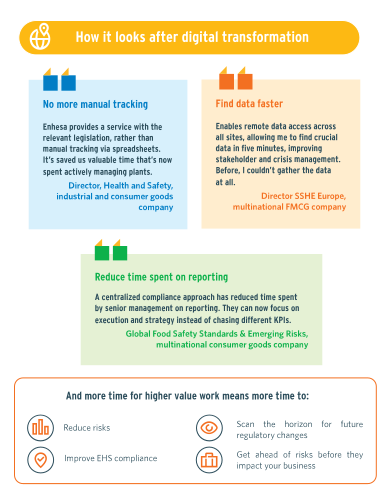
“A centralized compliance approach has reduced time spent by senior management on reporting. They can now focus on execution and strategy instead of chasing different KPIs.”
Global Food Safety Standards & Emerging Risks, multinational consumer goods company2. Greater agility
The ability to quickly understand compliance requirements across multiple jurisdictions means leadership can pivot quickly when conditions change, and be assured that those changes can be implemented consistently across all affected jurisdictions.
This can include:
- Entering new markets faster: Instead of spending months consolidating local consultants’ advice, executives can instantly see applicable regulations in new jurisdictions, allowing swifter operation scaling or product launches
- Responding to regulatory changes quicker: If a new chemical restriction is introduced in the EU or a new emissions standard emerges in Asia, with real-time data leaders can immediately adjust production processes, supplier contracts, or investment decisions — avoiding costly last-minute overhauls
- Supply chain risk visibility: If a supplier in a critical region faces new EHS obligations, reliable data alerts leadership early — that foresight allows procurement teams to secure alternatives or support suppliers in adapting, preventing disruption
- Sharper crisis management: In the event of an audit, investigation, or incident, executives can retrieve site-level compliance status within minutes — reassuring regulators, insurers, and stakeholders in this way can often mitigate reputational or financial fallout
“Enhesa enables remote data access across all sites, allowing me to find crucial data in five minutes, improving stakeholder and crisis management. Before, I couldn’t gather the data at all.”
Director SSHE Europe, multinational FMCG company3. Smarter strategy
More and better compliance data provides greater insights for leadership to make proactive decisions that safeguard both capital and reputation.
Here’s just a few examples of what strategic decisions can benefit from stronger EHS compliance data:
- Capital investment: Leaders can identify regulatory risks before expanding or retrofitting facilities to protect long-term viability
- Market entry: Anticipating compliance requirements in new markets can accelerate product launches and avoid costly recalls
- Supply chains: Evaluating vendor compliance with accurate data strengthens resilience and reduces reputational exposure
- Mergers and acquisitions: It’s vital to expose any hidden liabilities during due diligence to guide smarter acquisitions and mitigate risks
- Insurance: Proactive compliance is a great way to receive favorable premiums and risk coverage from insurers
- ESG strategy: Sustainability initiatives need to align with regulatory trends to maximize impact and credibility
“Enhesa can help you with regulatory compliance, reducing your exposure and potential fines. Our H&S fines were ~€50k per fine, and we reduced the frequency of these from using Enhesa”
Director SSHE Europe, multinational FMCG companyThe risks and costs of insufficient compliance data
Without these capabilities, leadership teams face mounting risks — some of which go beyond a simple financial cost…
Unexpected legal fees
Gaps in compliance expose companies to lawsuits, penalties, and settlements. Better data highlights risks early, allowing proactive corrections that avoid costly legal entanglements.
Runaway local consultancy fees
Fragmented regulations often force reliance on multiple regional consultants. Centralized data reduces dependence, curbing costs while empowering teams to manage compliance independently.
Escalating insurance and audit costs
Insurers and auditors charge premiums for uncertainty. Transparent compliance data builds confidence, lowering premiums and reducing the need for frequent, resource-intensive audits.
Reputational damage with investors and customers
Non-compliance undermines trust and damages brand equity. Consistent, accessible data demonstrates accountability, reassuring stakeholders that risks are managed responsibly.
The level of uncertainty that comes with these risks can only truly be countered with heightened compliance certainty. As confidence in compliance grows, so does security against these types of business risk. Without the right quality data, businesses cannot confidently reply when asked about the robustness of their compliance program.
“There is a significant strategic agility to be gained through having confidence in your global EHS compliance status.”
Mary Foley, Expert Services Strategy Director, EnhesaWhat are the questions only better data can answer?
At the board and C-suite level, the value of compliance data is best measured by the clarity it brings to strategic questions.
Here are several stand-out critical strategic senior leaders need to have solid answers for:
- Are there any new compliance needs or requirements emerging from global shifts?
- What are our regulatory risks across different operational and market regions?
- How do these risks affect our supply chains?
- How can we manage them effectively with the resources at hand?
- Most importantly: How can we reduce overall risk exposure while still prioritizing growth?
These aren’t tactical compliance questions — they’re business continuity and growth questions. Having reliable, consolidated data allows executives to answer them with confidence, in real time.
Find out more about answering these questions with better EHS data
Before and after: The impact of digital EHS transformation
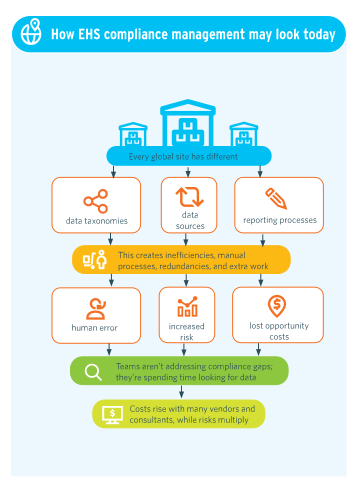
There’s a stark contrast between how compliance management often looks today versus after digital transformation.
Today’s reality
If different global sites maintain different data taxonomies, reporting processes, and sources, this type of patchwork can often lead to redundancies, human error, rising costs, and wasted opportunities. Teams might even spend more time looking for data than acting on it. Multiple vendors and consultants — when involved — can also add complexity while risks multiply.
After transformation
When compliance data is centralized, standardized, and actionable, manual tracking is eliminated — saving valuable time for managers to focus on operations. Remote access means that any leader on the EHS team — or any other team that relies on EHS data — can retrieve critical compliance information in minutes, enhancing crisis response and stakeholder confidence. Additionally, senior executives will spend less time compiling reports and more time shaping strategy based off company-wide consistent, reliable information.
Looking forward: The reality of investing in better data
The outcome of better regulatory information and insight is not only efficiency, it’s also foresight. Scanning the horizon for regulatory shifts means businesses can anticipate risks before they impact operations, and dedicate more time to higher-value work like risk reduction and strategic growth — but this is far easier said than done. Teams would need to dedicate enormous amounts of time and resource searching for, analyzing, and researching future-forward changes.
Looking ahead to tomorrow’s regulatory changes and business challenges is possible when companies combine reliable, consistent, and timely compliance data with expert-driven insight into what those future changes will mean for their business.
Turning compliance confidence into business advantage
Better EHS data isn’t just about compliance — it’s about unlocking agility, foresight, and competitive advantage. With stronger insight, leadership can reduce risk, build resilience, and accelerate growth. The companies already making this shift are seeing measurable ROI.
Discover the full story in our executive brief and see how smarter compliance intelligence delivers real-world business value.