 Ga naar de hoofdinhoud
Internal RSLs: A strategic foundation for smarter chemicals management
Free guide
Discover how internal Restricted Substances Lists can drive safer, more sustainable products and future-proof your chemical strategy. Download this expert guide to get started today.
Start reading your free guide
Quick Summary
- Internal Restricted Substances Lists (RSLs) help companies go beyond basic compliance and build a proactive, long-term chemicals management strategy.
- A well-designed internal RSL lets companies anticipate regulatory changes, reduce supply chain risks, and set their own standards for safer, more sustainable products.
- This free guide from Enhesa toxicology experts covers how to develop your own internal RSL, including key criteria to consider and a real-world example from the beauty industry.
“Internal RSLs can help companies move from a compliance-only mindset to a sustainability mindset.”

Understand why internal RSLs are essential for proactive chemicals management and long-term sustainability goals
Discover how internal RSLs help companies anticipate regulatory changes and reduce risks across global supply chains
Learn the key criteria for developing and sharing internal RSLs tailored to your company’s priorities
See how a beauty brand successfully implemented an internal RSL to drive safer, more transparent products
What’s inside the guide?
As product safety and chemical transparency are under growing scrutiny, companies need practical tools to manage chemicals and meet changing expectations. One such tool is the Restricted Substances List (RSL) — a list of chemicals that are banned or limited due to their impact on human health and the environment.
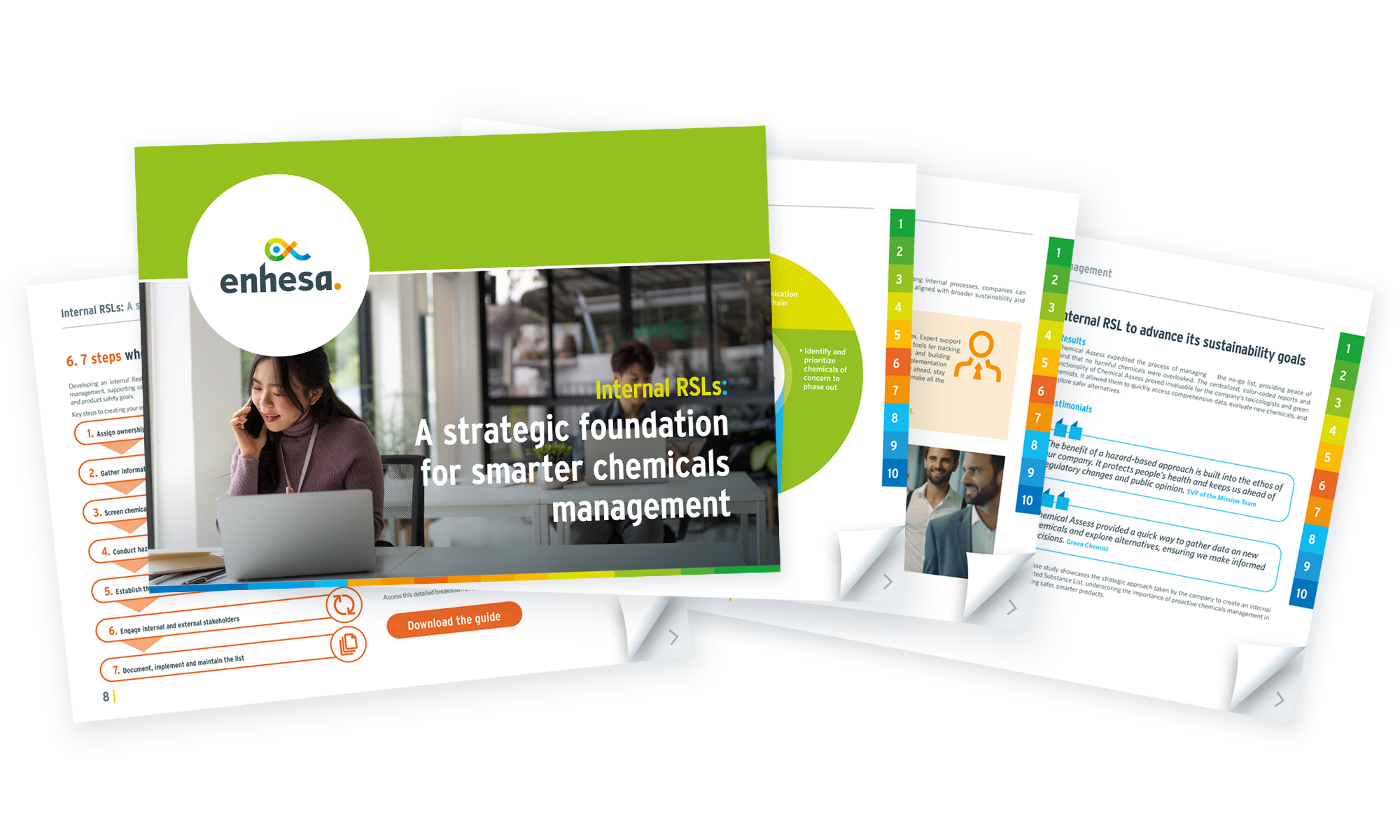
This strategic guide lays the foundation for understanding and implementing internal RSLs as part of a proactive chemicals management approach.
You’ll discover:
- Why internal RSLs matter — and how they differ from standard lists
- How internal RSLs fit into a safer chemistry strategy
- Key criteria to consider when developing and sharing your own internal RSL
- A real-world case study from the beauty industry
- Actionable steps to help get you started
“Internal RSLs give companies control over chemical use and establish a strong foundation for safe, sustainable chemistry innovation.”
Meet the experts behind the guide

Colleen McLoughlin
Director, Toxicology & Interdisciplinary Sciences, Ph.D., DABT, E.R.T.
Enhesa
Colleen has been with Enhesa since 2016. She holds a Ph.D. in Biomedical Engineering and is a US board-certified toxicologist (Diplomate American Board of Toxicology-DABT) and a European Registered Toxicologist (E.R.T.). As head of the Toxicology Department, she assists companies in achieving their sustainable chemistry goals by helping assess new chemicals to provide our clients with critical insight into the human health, environmental health, and fate of the chemistries in their products and processes. Find out more about Colleen.

Ziba Hosseini
Toxicology Specialist, Ph.D.
Enhesa
Ziba is a dedicated toxicology specialist with a Ph.D. in Environmental Sciences and a background in geochemistry. Based in Enhesa’s Brussels office, she plays a key role in the chemical assessment process, leveraging her expertise in evaluating chemicals to assist companies with compliance while addressing environmental impacts. She also has extensive knowledge of biocidal and pesticide regulations, particularly under ECHA and US EPA guidelines. Find out more about Ziba.
Take control of your safer chemicals strategy
Get strategic insights to help you:
- Understand the value of internal Restricted Substances Lists (RSLs)
- Strengthen your sustainable chemistry strategy
- Learn key criteria for creating your own RSL
- Take actionable steps towards safer, more sustainable products
👉 Download the guide